
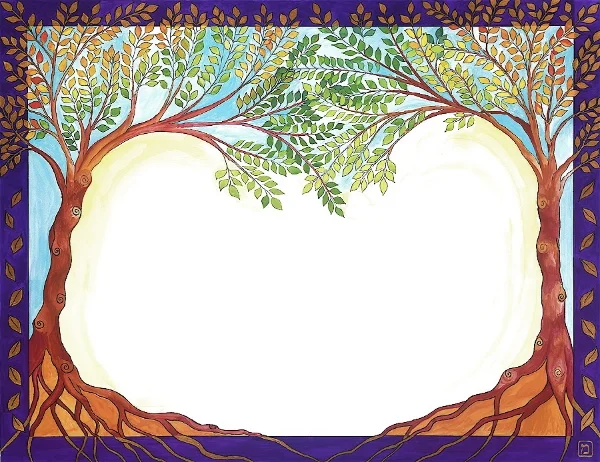
Ketubot
A ketubah is the traditional Jewish marriage contract — signed at the wedding, read aloud beneath the chuppah, and displayed in the couple's home thereafter. Originally a legal protection for the bride, over two millennia it has become both a binding agreement and a sacred work of art. The text, rendered in Aramaic and Hebrew (often with an English or vernacular translation), enumerates the partners' obligations to one another. Contemporary ketubot include egalitarian, interfaith, and same-sex adaptations of the traditional text.
The designs shown here can be viewed and ordered through Ketubah.com, or click on an image to go directly to the order page.
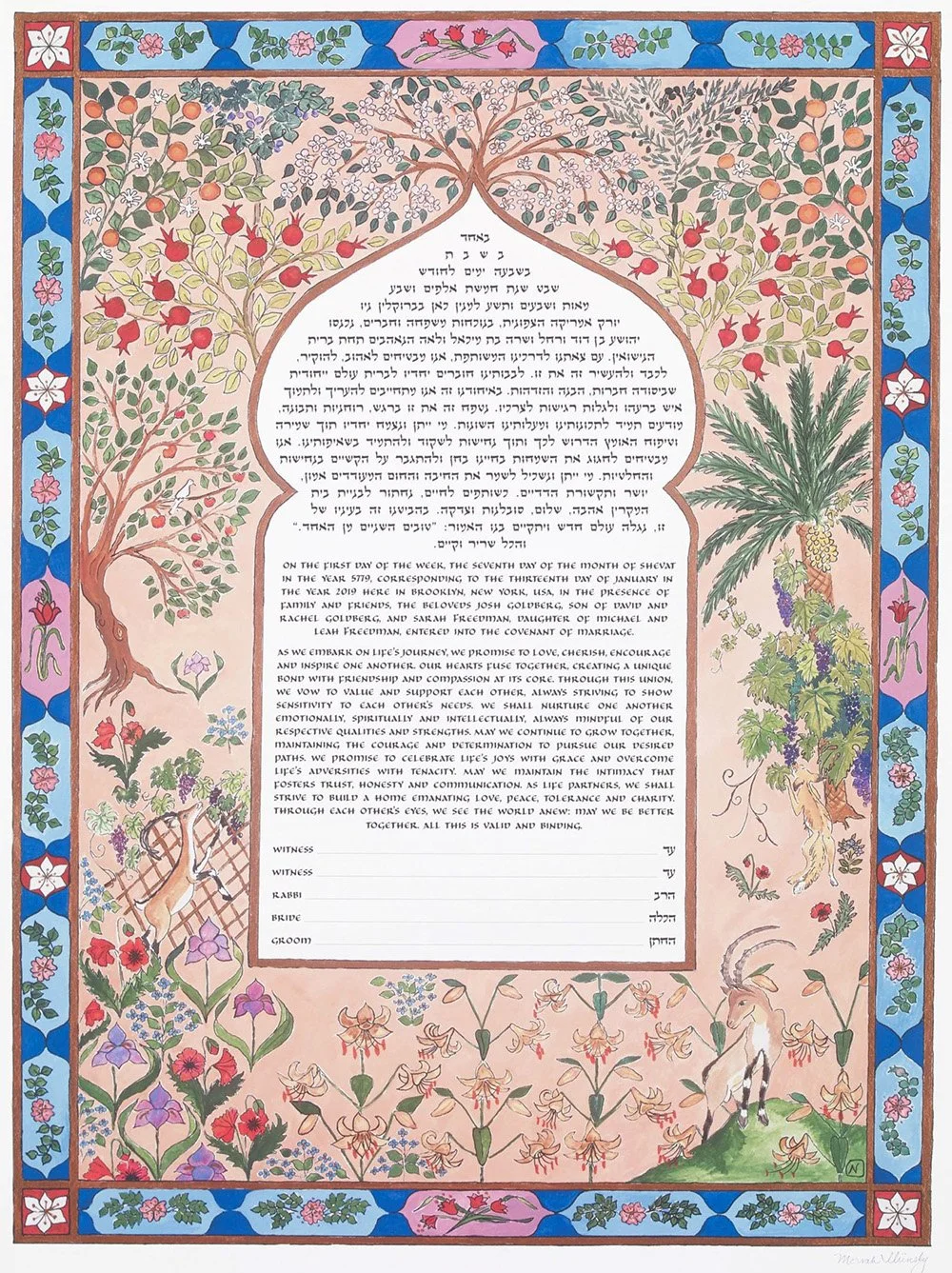
Song of Songs Ketubah
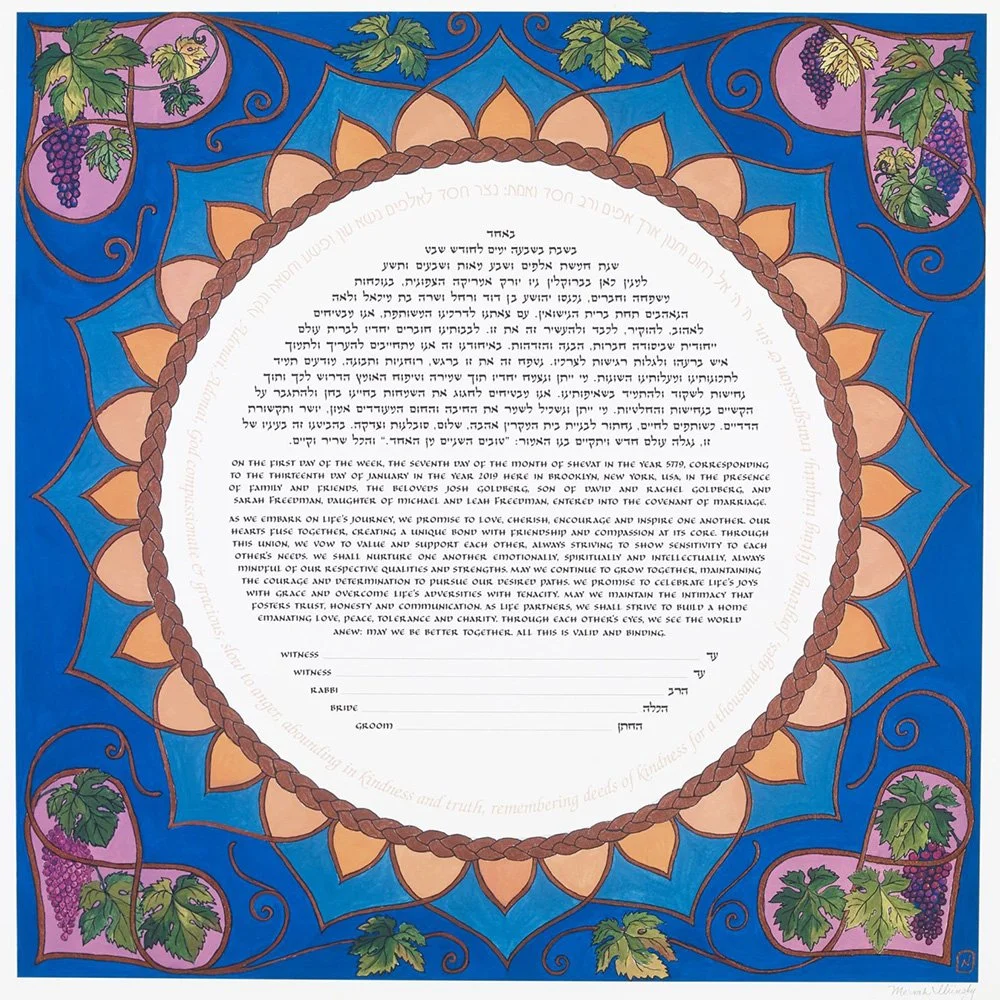
Surrounded In Love Ketubah
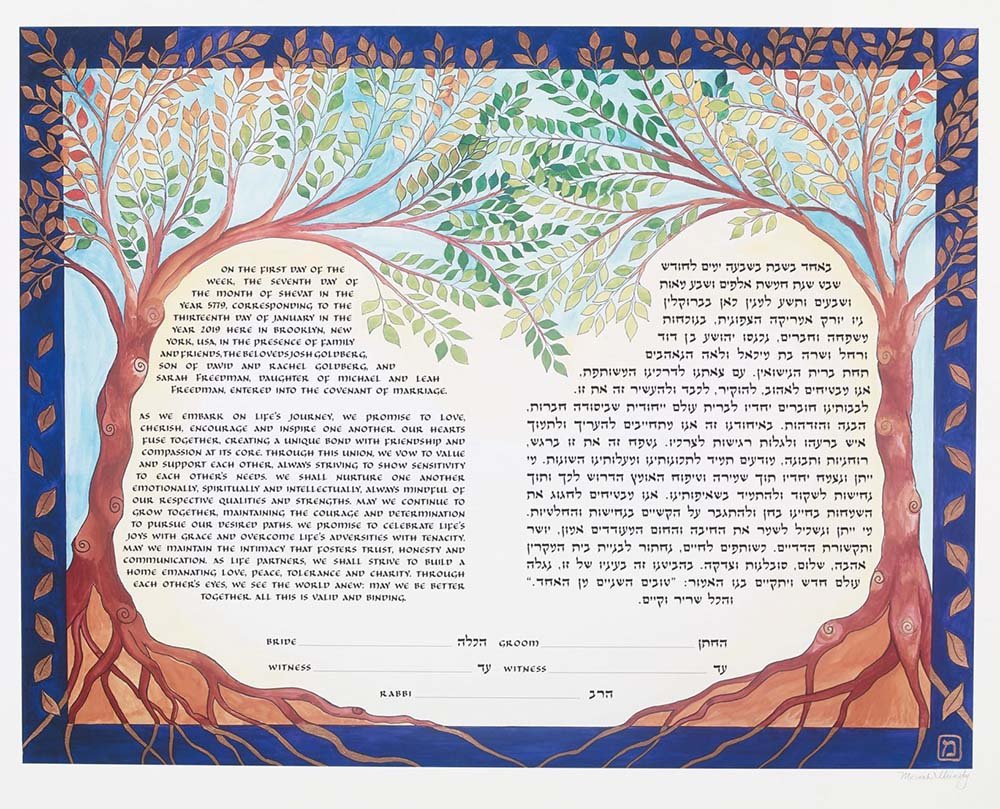
Trees Growing Together Ketubah
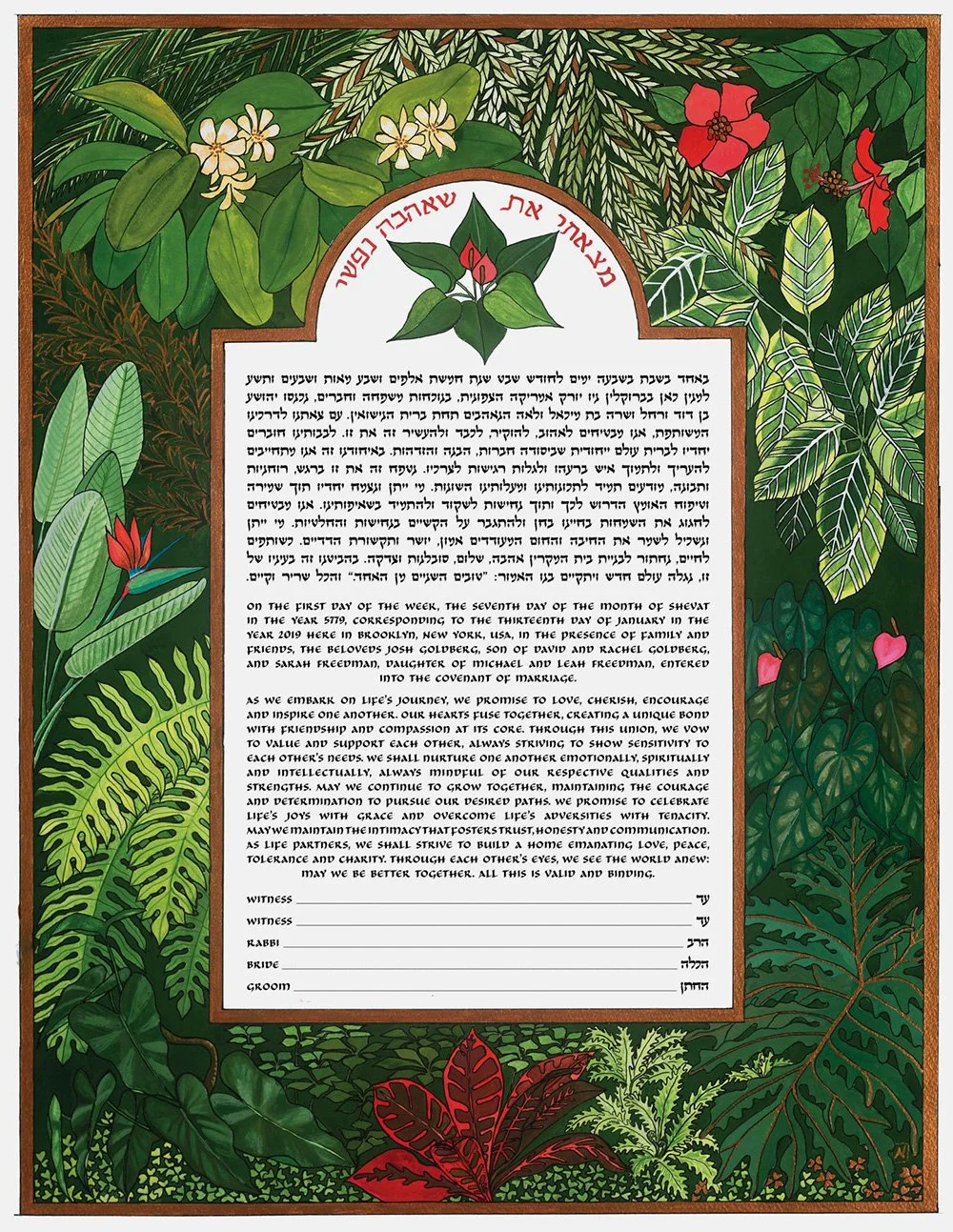
Tropical Eden Ketubah
A ketubah, to me, is two things at once. It is a contract — the legal architecture that sets the partners' obligations to each other within the framework of Jewish tradition — and it is a sacred object, a visible covenant that lives on the wall of a home for the rest of a life together. I have always loved that combination: a binding agreement, illuminated.
Each ketubah I designed began with the text. I would read the words slowly, in Hebrew and in English, and let an image rise from them — from the Song of Songs, from the prophets, sometimes from a line the couple had written themselves. The image always grew out of the words.
My ketubot draw on the visual vocabulary I have spent a lifetime inside: illuminated manuscript tradition, gold leaf, the foliage and creatures of medieval haggadot, the geometries of Kabbalah, the colors of the seven species. I designed for traditional couples, for interfaith couples, and for same-sex couples — the covenant is the covenant; the art is the art.