
LOG
The Heart of the Stranger
But Passover seder doesn't just leave us with the story. It also instructs us as to how we are to orient ourselves as a result: with identification with the oppressed.
The Heart of the Stranger
Long ago, the story of a slave rebellion and escape to freedom, a happening of epic proportions, got written down in a scroll. That story of oppression and trauma and miraculous redemption also got inscribed in the psyche of the Jewish people. The ritual of the commemoration of that event, the Pesach seder, has been an effective teaching tool throughout countless generations. But the Passover seder doesn't just leave us with a story. It also instructs us as to how we are to orient ourselves as a result of that ancient experience: we are to identify with the oppressed.
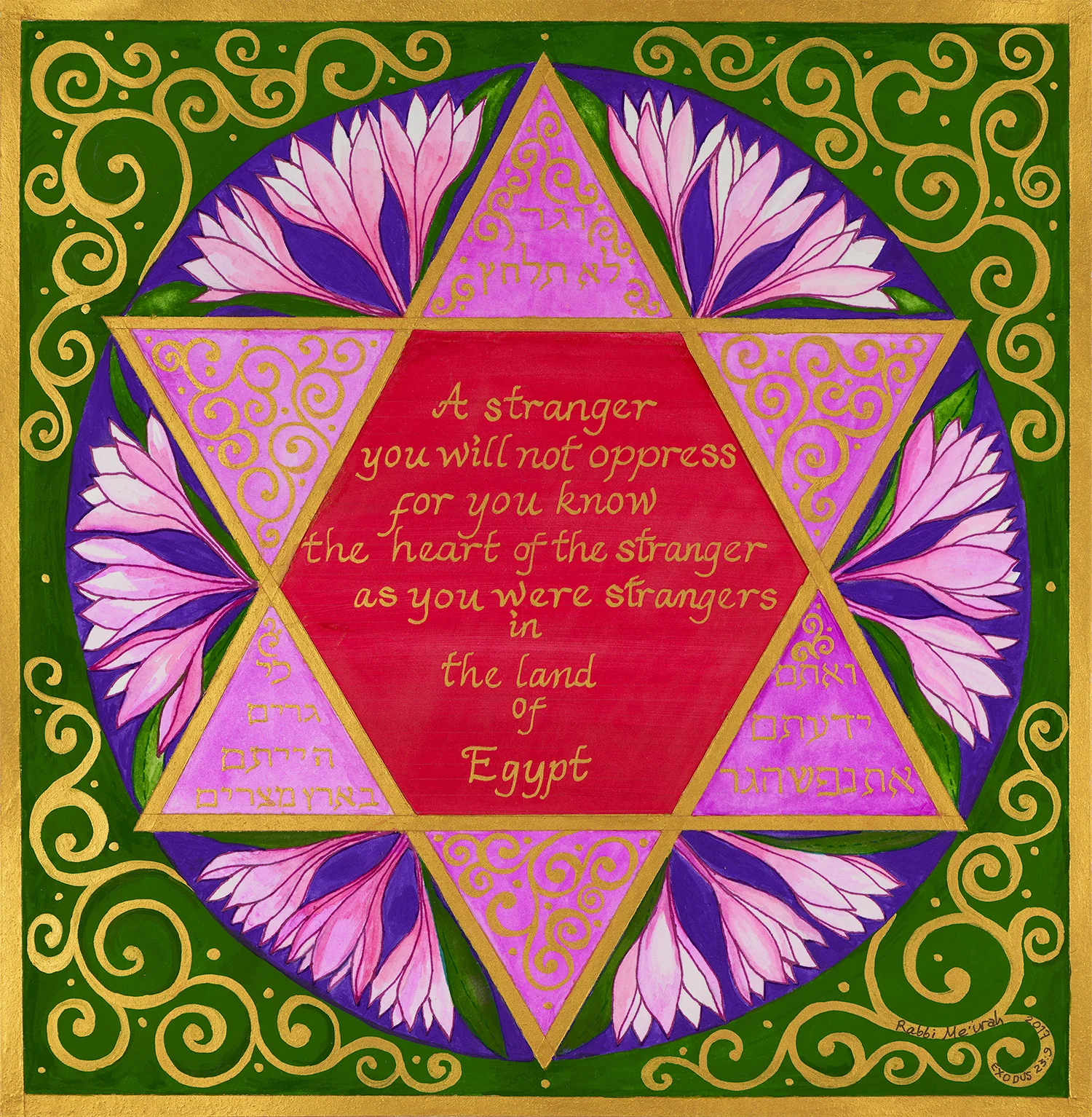
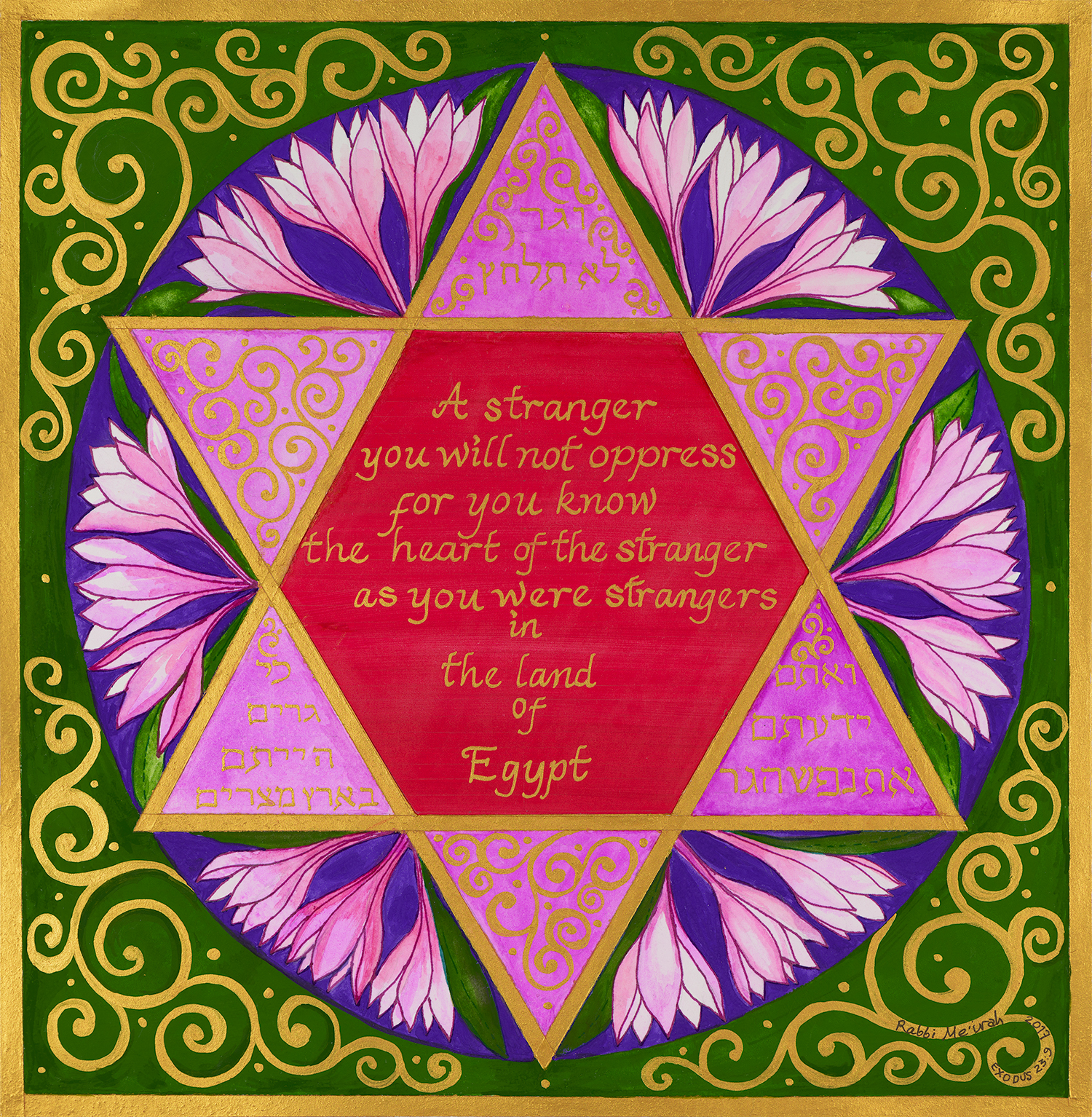
There are several ways that one might adjust to trauma: numbness, rage, retribution; but our Torah constantly reminds us to follow the way of empathy, compassion and advocacy for the most vulnerable. This new illumination, "The Heart of the Stranger," serves to remind us of this orientation. The quote comes from Exodus 23:9, and is but one of many admonitions to care for the stranger, the fatherless and the widow.
Click here to purchase a print. 30% of the profits will be donated to the ACLU.
I am embarking on a series of social justice illuminations. "The Heart of the Stranger" is the second, along with "Tzedek Tzedek Tirdof." I am soliciting verses for this series, so write to me with your suggestions. If I use yours, you will get a free 8.5" square print.
Blessings, Rabbi Me'irah
Passover Gifts
On the evening of April 10, all over the world, Jews will sit together, eat ritual foods, and retell our story of freedom and self determination. The Passover story, along with the receiving of the Torah on Mt. Sinai, is a foundational pillar of Judaism. We are enjoined to teach the story of the Exodus to our children, so I would like to celebrate with you with the following two gifts.
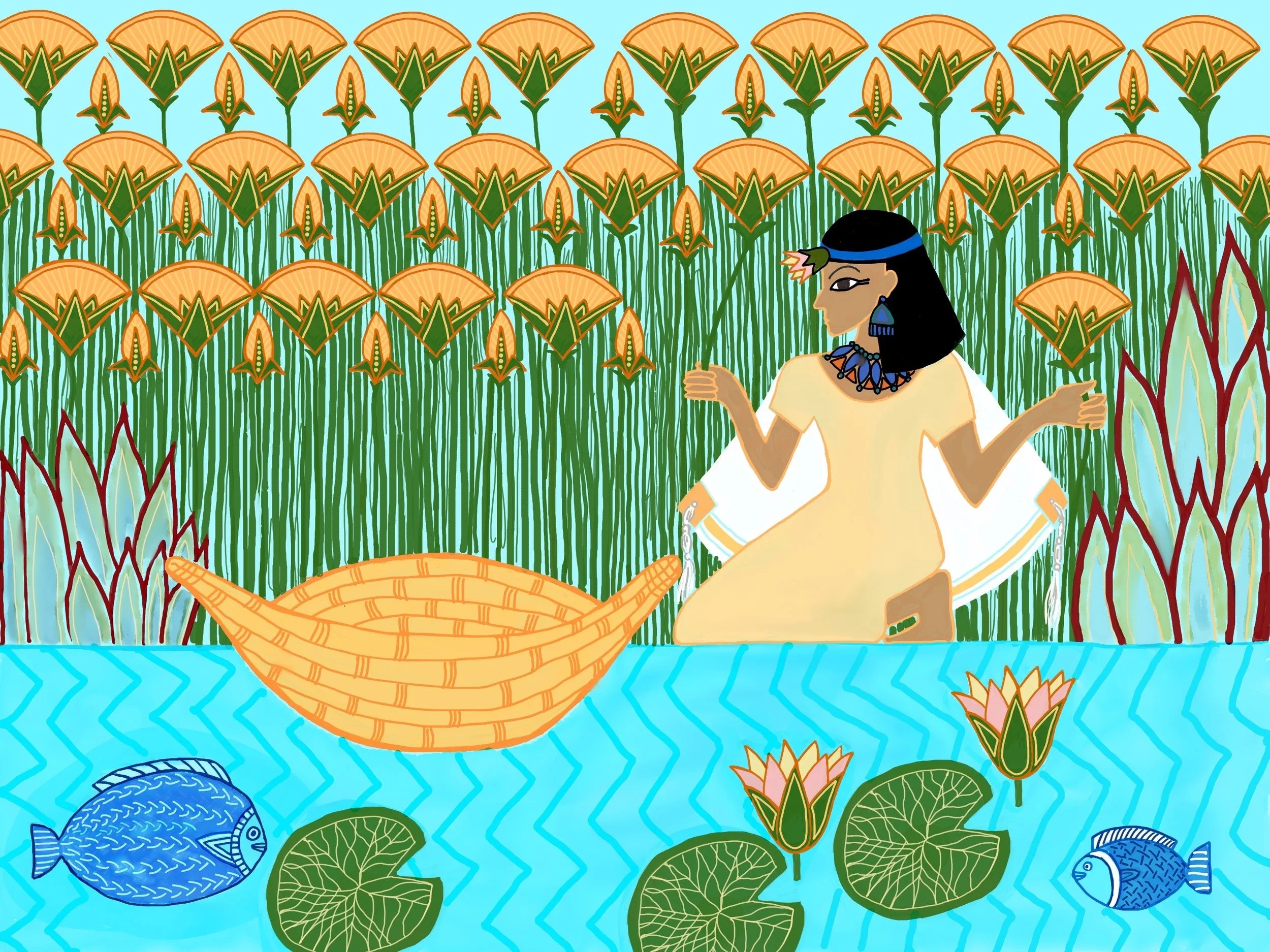
My first gift for you is this depiction of Miriam, Moses' older sister, watching him in his little ark that his mother Yocheved carefully made for him, on the Nile. Look at the picture for a few seconds, and see where your eye is drawn. What else matches that shape in the picture? How do we know that this is Miriam and not Pharaoh's daughter? Click here to download the PDF. Print it out and laminate it to make a Passover placemat.
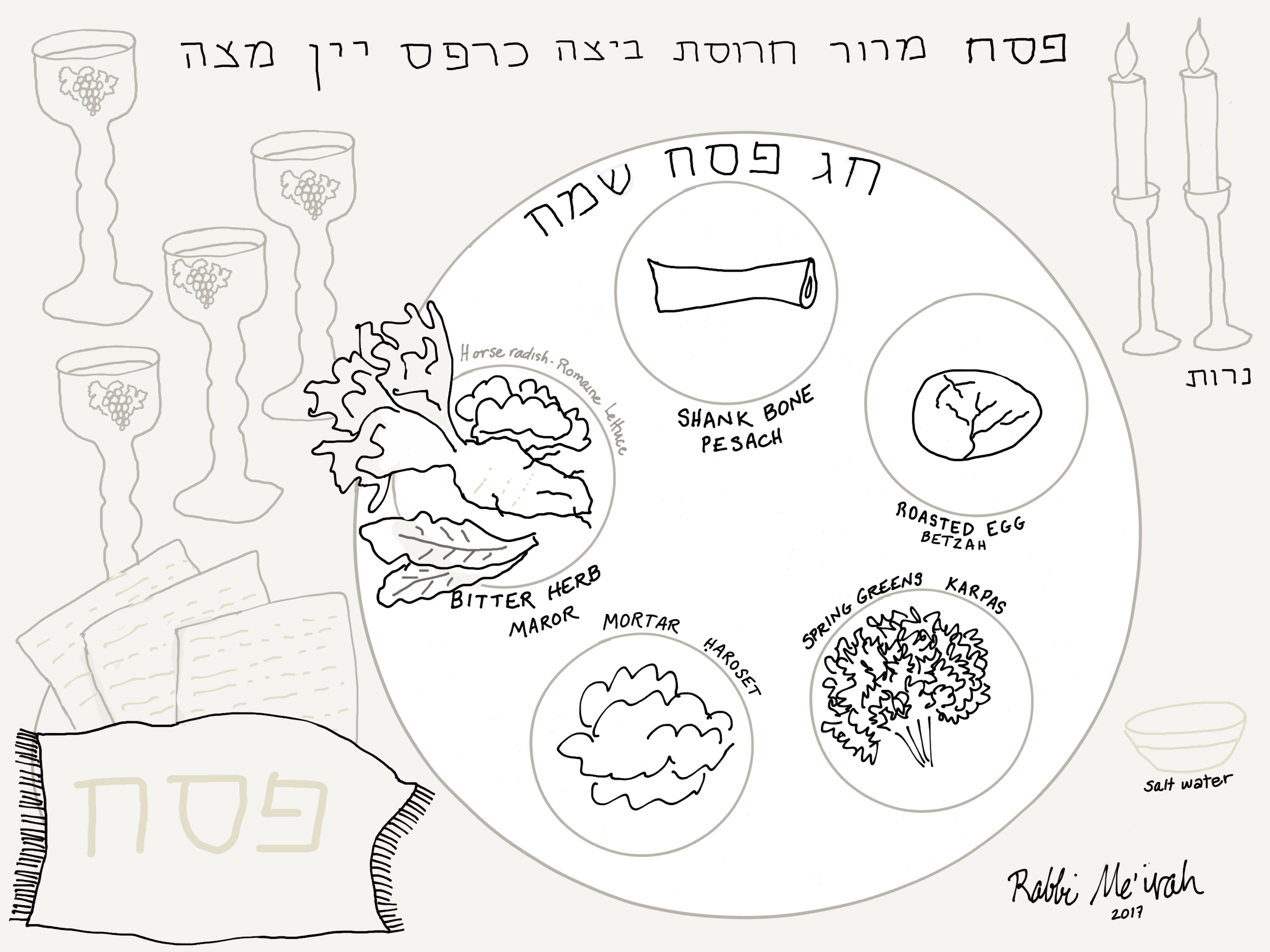
This second image depicts the ritual foods that remind us of the story of Pesach. Color them in, and look in the Haggadah to find the symbolic meaning of each item. For those with Hebrew skills, match the Hebrew name with the item. Click here to download.